I love sports and often use sports analogies. Now is the time of Major League Baseball's Spring training. At every team's camp, at least one or more young men try to earn a place on the team's roster. Here is a hypothetical situation: Your team has two people at camp competing for one position, let's say third baseman.  So far, one young player, Smith, has had a terrific Spring.  His batting average is .453, he has stolen three bases, his fielding has been perfect, and his attitude has been exemplary. Smith was undrafted out of college, where he played for three years and...


My background has primarily been selling enterprise-wide financial, human resource, medical, anti-money laundering, and manufacturing solutions.  In most cases, the prospective buyer has strategically decided to change their infrastructure. The highest-level executives typically make these decisions in an organization.  So, when deciding who to sell to in the organization, it is a mistake to ignore the importance of reaching the "C" Suite executive. They are the ones who approve all decisions and expenditures. The approver is sometimes called the "economic buyer" or the "key decision maker."2 Lower-performing sales pros often make the mistake of focusing solely on their user buyer contacts and...

This past week, I had a case of influenza. It reminded me of an incident many years ago when I began my career as an accountant. I joined the cost accounting department for GD Searle & Co., then an independent, more than one-hundred-year-old, family-controlled public biotechnology company, now a Pfizer subsidiary. The CEO at the time was Daniel Searle, a great-grandson of the founder. Searle was known for releasing the first birth-control pill, Enovid, and for developing Metamucil, Dramamine, Celebrex, and aspartame. The leader of my cost accounting team was Glen, who was in his forties.  Glen had worked for Searle for...

Some sales pros work for companies that furnish adequate suspects and unqualified leads to keep them busy achieving their sales goals. I was not as fortunate, working for several technology companies and a few start-ups.  If I did not develop leads, I would have starved and been terminated from my sales role by the company.  Fortunately, that never happened.  However, I had to learn to be resourceful and develop leads in various ways, depending on how much assistance I received from the company’s marketing department, which ranged from none to quite a bit. Some authors and sales trainers minimize the value...

Many sales pros ask me what to do when the prospect doesn’t return calls or emails.  You have been calling on a prospect for several months and believe you have established rapport with your contact. You presented a thoroughly researched business case about two weeks ago but have not received any replies to your telephone calls, texts, or emails.  This is now called “ghosting.”  Yes, they are impolite and don’t care how much it means to you. You are very frustrated with the silence and wonder what the problem is.  Did you do something wrong?  Your mind is super active. And...

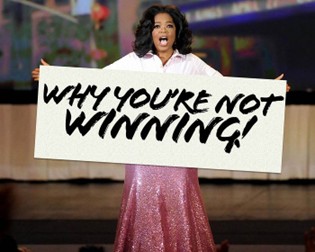
This sounds like an obvious statement. Wouldn't Homer Simpson say "duh" if I said this to him? Isn't it a binary condition—either one or the other? And isn't the reverse then true, too? No, not really. It also could be neither. It is not that simple. How do you know whether you are winning or losing the sale you are trying to close? Who should you ask? Your contact at the company you are trying to sell? They're not always truthful. Your competition? They can't be trusted to be honest. Your sales manager? It is probably your best option, but do you...

I am often asked this question: If a buyer gives you the choice to be the first, middle, or last seller to present your proposed solution to the evaluation team, which should you choose? Conventional wisdom suggests that one should try to be the final presenter when the buyer reviews several suppliers. Many sales trainers say it is to your advantage to be the last presenter. The thinking is that the buyers will remember what was most recently presented to them when they decide. This strategy has an element of validity because buyers may forget the key points you pointed out...

  Salespeople often ask me to explain the best method of identifying the highest-potential prospects to target.  “How can I find these prime prospects so I do not waste my time on companies that will not buy from me (this year)?” There is no easy answer to this, but there is a strategy that you can use to increase your chances of finding the best prospects.  And it is not as difficult as it may seem.  The clue is that you need to decrease the universe of all prospects to just those with needs that best fit your company and product. Consider a...

Your sales manager is anxious and wants you to close additional sales this month.  Perhaps she is worried about meeting her quarterly or annual new business sales quota. She directs you to go find some “low-hanging fruit.” This a metaphor representing the most accessible fruit to reach on a tree, which she assumes will take the shortest amount of time to close.   You leave her office wanting to please her but wonder where to find these opportunities. So, where can you find these “low-hanging fruit “opportunities? Here are a few ideas: Current opportunities that you can close within 30 days Examine your...

We have reached the time of the year when sales managers carefully examine the opportunities forecasted to close by the end of the calendar year. Most sales pros are optimistic and often will forecast an opportunity to close by year-end, even if they only had one conversation with the buyer. Most organizations use a sales methodology incorporating milestones or activities to explain an opportunity's stage in the pipeline or funnel. For example, I have used the Miller Heiman sales methodology1 to define where an opportunity is at in the sales funnel, with the activities that occur in each stage, is as follows: ...